
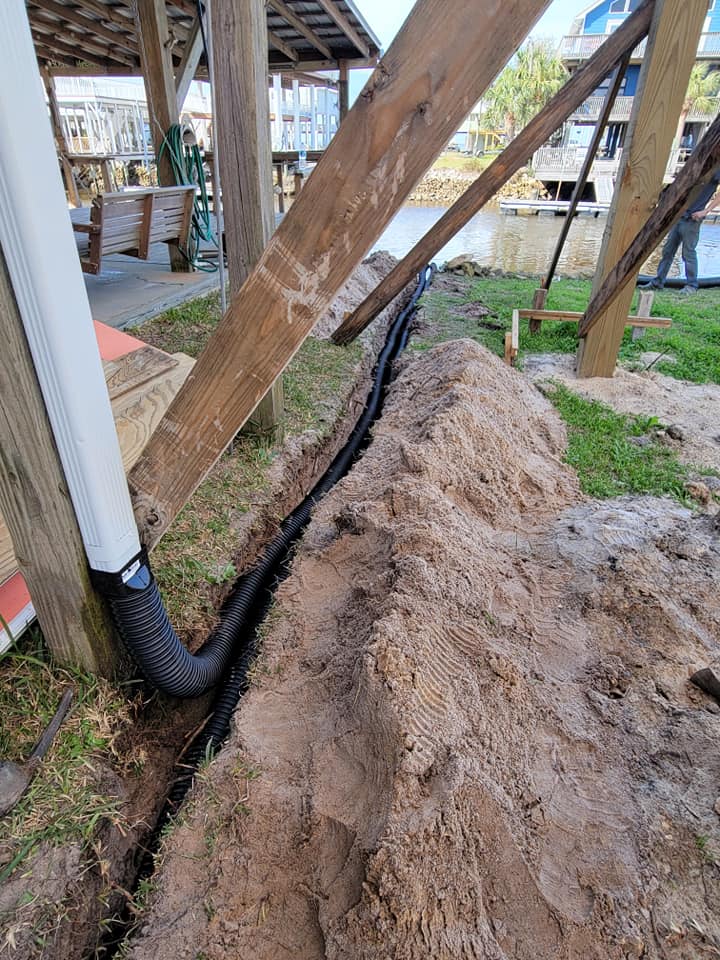
Crawfordville homes contend with a unique combination of sandy soils, occasional clay layers, and extensive pine tree root systems. When a subterranean drainage setup stops moving water after a Wakulla County cloudburst, your entire property faces immediate hydrostatic pressure risks. If you notice soft spots in your lawn or standing water near your crawlspace, identifying what causes a French drain to clog in Crawfordville, FL, is critical to preventing foundation failure before structural damage sets in.
Common Drainage Problems
- Dirt Buildup Blocks Drainage: Fine sand and clay can slowly build up inside drainage pipes and reduce water flow.
- Tree Roots Block Pipes: Oak and pine roots can grow into drainage lines and cause blockages.
- Poor Slope Slows Water Flow: Pipes without the right slope can allow water and dirt to collect instead of draining properly.
- Crushed Pipes Restrict Water: Heavy lawn equipment can damage weak underground pipes and block water flow.
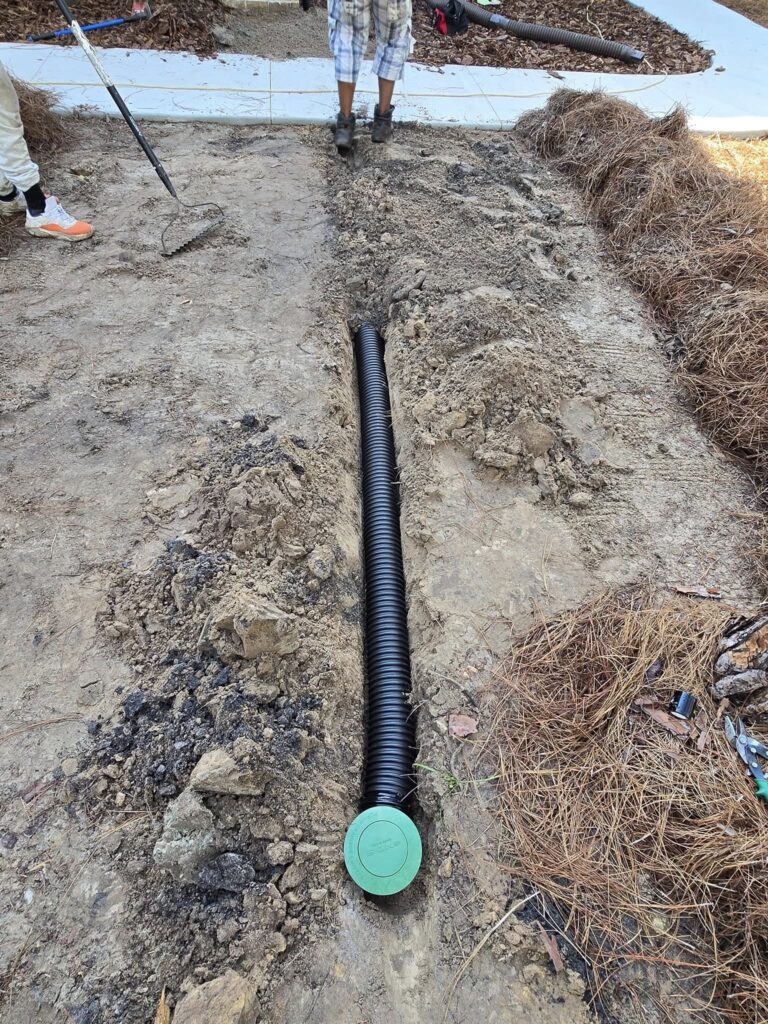
Why Does Local Soil Composition Affect the Drainage Filter Fabrics?
The sandy soils and localized clay deposits found throughout Wakulla County create a dense plaster layer that completely coats subterranean filters. When heavy tropical storms saturate the ground, these micro-particles wash down into the trench, creating a barrier called fabric blinding. This completely chokes the water flow. Investigating what causes a French drain to clog in Crawfordville, FL, often reveals that this sediment layer stops water from ever reaching the perforated pipe.
How Do Tree Root Networks Destroy Sub-Surface Pipes?
Once roots reach the aggregate layer, they wrap around the pipe and slip into the perforations, expanding until the channel is entirely blocked. The reality on the ground is that standard fabrics cannot deter aggressive root networks. Homeowners evaluating what causes a French drain to clog in Crawfordville, FL, typically find that nearby mature trees have filled the pipe interior with thick root webs.
Professional Drain Cleaning and Repair
High-Pressure Drain Cleaning
- Use high-pressure water to break up packed dirt, clay, and debris inside the drain.
- Flush buildup out of the pipe to restore proper water flow.
- Check the water coming out to make sure the blockage has been cleared.
Drain Camera Inspection
- Use a waterproof camera to inspect the inside of the drainage pipes.
- Find crushed pipes, damaged sections, and areas blocked by tree roots.
- Locate the problem before digging to avoid unnecessary yard damage.
Drainage System Repair
- Carefully dig around the damaged section of the drainage system.
- Replace weak or damaged pipes with stronger PVC when needed.
- Add clean gravel around the pipe to improve french drainage and help water flow properly.
Understanding Your Drainage System’s Vulnerabilities
Soil and Sediment Threats
- Clay Blinding: Fine red clay particles bond directly to exterior landscape fabrics, turning porous wraps into solid waterproof barriers.
- Silt Accumulation: Fine sandy soil bypasses loose joints, settling inside pipe valleys where it slows water velocity to zero.
Vegetation and Environmental Risks
- Root Piercing: Pine and oak root systems exploit microscopic gaps in trench liners to block internal pipes.
- Algae Biomass Buildup: Stagnant water sitting in poorly sloped lines breeds iron-oxidizing bacteria that form thick, gelatinous clogs.
Structural and Installation Faults
- Negative Grading: Installing a pipe without a consistent approximately a 1% slope forces water to pool and drop sediment mid-run.
- Pipe Pinching: Using cheap corrugated pipe under driveways can cause line flattening under heavy vehicle loads.
Key Industry Factors Affecting Underground Flow
- Non-Woven Geotextile Fabric: A porous synthetic membrane engineered to let water pass through while blocking micro-fine soil particles from entering the gravel bed.
- Hydrostatic Pressure: The continuous mechanical force exerted by standing groundwater against your home’s concrete foundation walls or crawlspace perimeter.
- Aggregate Graduation: The specific sizing of washed river stone used to create empty pockets that let water flow freely to the collection line.
- Cleanout Port: A vertical pipe extension rising to ground level that allows direct technician access for cameras and clear-out machinery.
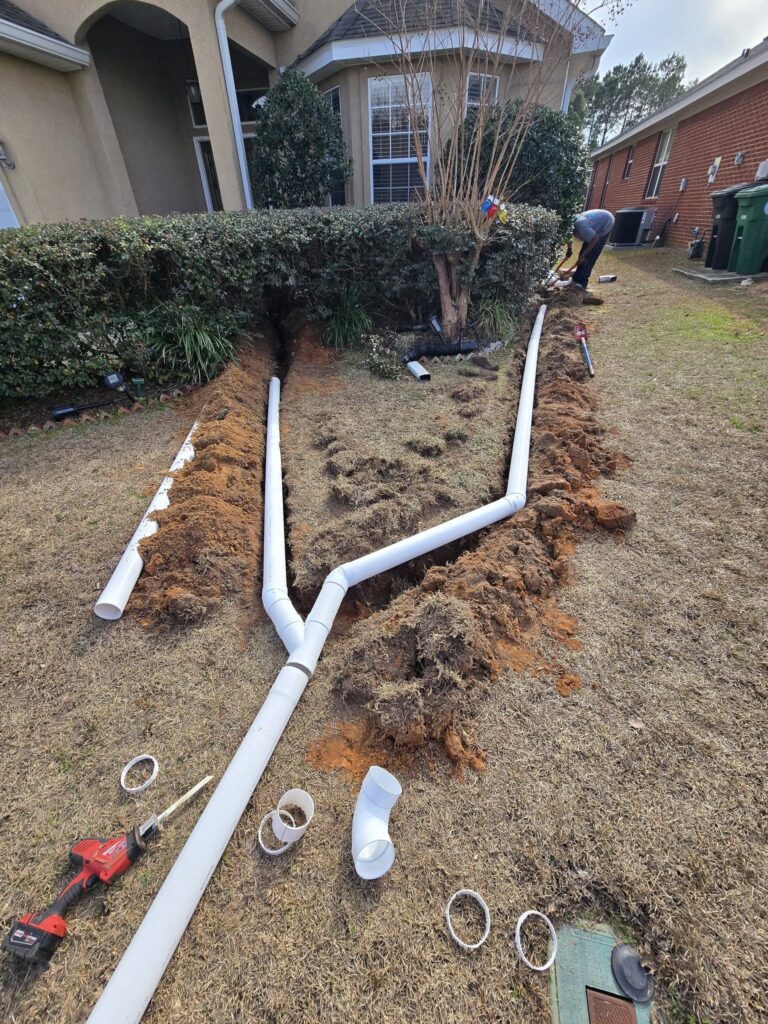
What We Commonly See During Inspections
Here’s the part most contractors won’t tell you: Many of the failed systems we inspect in Crawfordville were doomed from day one because the installer used cheap, pre-wrapped sock pipes from a big-box store. These thin fabric socks get packed tight with our local clay within a few years. Once that fabric blinds over, water backs up directly into the yard or crawlspace. True drainage security requires a wide trench lined with premium, industrial-grade nonwoven geotextile fabric, packed with clean aggregate, and built with smooth-core rigid PVC that can be cleaned out if a problem ever arises.
Securing Your Property Against Underground Water Damage
Leaving a failing yard drain unaddressed allows rising groundwater to compromise your foundation footings and spark toxic mold growth inside your crawlspace. Restoring your property’s sub-surface drainage path with high-grade, durable materials eliminates chronic lawn-swamp conditions and provides long-term structural security.
You will protect your home investment from the worst regional rain events. If you are struggling with a swampy lawn and want to permanently address what causes French drains to clog in Crawfordville, FL, let our experienced field technicians handle the heavy lifting. Bradley’s Custom Gutters delivers transparent diagnostics, proper grading and drainage repairs, and robust drainage solutions tailored to our local soil conditions.
We treat your yard with respect, ensuring clean excavations and long-lasting performance. Don’t wait for the next severe cloudburst to flood your home’s foundation. Call (850) 879-6111 today to speak with a drainage professional and book your comprehensive on-site drainage assessment.
Can a Clogged Yard Drain Be Cleared Out Without Digging up the Whole Yard?
Yes. Technicians can often clear out packed silt and soft debris layers by running a professional hydro-jetting line through your system’s cleanout ports. However, if a camera inspection reveals that heavy tree roots have shattered the pipe walls or collapsed the line, targeted excavation is required to replace the broken sections.
How Long Do Underground French Drainage Systems Typically Last?
A properly installed system using rigid Schedule 40 PVC and premium geotextile fabric will easily last 20 to 30 years. Systems built with cheap corrugated pipes or pre-wrapped sleeves usually fail within three to five years due to severe clay blinding and pipe crushing.
Why Does My Crawlspace Stay Damp if I Have an Outdoor Trench Drain?
Your exterior line may be installed too shallow, or the slope might be preventing water from moving away fast enough. When a line becomes clogged with silt, it traps standing water next to your home, allowing moisture to seep through porous foundation blocks into your crawlspace.
What Size Gravel Works Best for Backfilling a Sub-Surface Trench?
You should use three-quarter-inch to ¾-inch to 1½-inch washed gravel or crushed stone or crushed granite to backfill the trench line. Avoid using fine pea gravel or limestone screenings because small stones pack together too tightly, choking off the open pathways water needs to reach the pipe.
Will a Fabric Sock Around a Corrugated Pipe Prevent Clay Clogs in the Long Term?
No. Fine clay particles pass through the outer gravel bed and form a tight, waterproof paste directly over the thin fabric sock mesh. This common condition completely prevents water from trickling into the pipe, causing your yard to flood even though the pipe interior appears clear.