
Water management is one of the most important aspects of protecting a home’s foundation. While gutters and grading play essential roles in directing rainwater away from a structure, underground drainage systems provide an additional layer of protection that can significantly reduce the risk of foundation problems.
In Crawfordville, Florida, heavy rainfall, seasonal storms, and fluctuating groundwater conditions create unique drainage challenges for homeowners. When excess water accumulates near a foundation, it can cause soil erosion, settlement, moisture intrusion, and long-term structural damage. Underground drains help address these concerns by collecting and redirecting water before it can reach the home’s foundation.
Whether through buried downspout extensions, French drains, or perimeter drainage systems, underground drains can be highly effective at protecting residential properties from water-related issues. Understanding how these systems work and why they are important can help homeowners make informed decisions about drainage improvements.
Why Foundation Drainage Matters
A home’s foundation relies on stable soil for support. When water consistently accumulates around the structure, the surrounding soil can become saturated and unstable.
Excess moisture may cause soil movement, erosion, and changes in soil density, affecting the foundation’s ability to remain level and properly supported.
Over time, poor drainage can contribute to:
- Foundation settlement
- Cracks in walls or floors
- Moisture intrusion
- Uneven flooring
- Structural instability
- Landscape erosion
Effective drainage systems help minimize these risks by controlling how water moves across and beneath the property.
Water Challenges in Crawfordville
Homeowners in Crawfordville face environmental conditions that make proper drainage especially important.
Water Challenges in Crawfordville
North Florida experiences frequent rainstorms year-round, including periods of intense rainfall associated with tropical weather systems.
Large volumes of water can quickly accumulate around homes if drainage systems are inadequate.
Fluctuating Water Tables
Groundwater levels often rise and fall depending on rainfall patterns and seasonal conditions.
These fluctuations can increase moisture pressure around foundations and contribute to drainage problems if water is not properly managed.
Sandy and Clay-Based Soils
Many areas of Crawfordville contain sandy soils, clay-rich soils, or a combination of both.
Sandy soils generally allow water to move more freely, while clay soils can retain moisture for extended periods. Both conditions can present challenges for foundation stability when drainage is insufficient.
Because of these local factors, managing water effectively is critical for protecting homes from long-term structural damage.
How Underground Drains Protect Foundations
Underground drainage systems are designed to collect water and safely convey it away from vulnerable areas.
Reducing Hydrostatic Pressure
One of the primary benefits of underground drains is the reduction of hydrostatic pressure.
Hydrostatic pressure occurs when water accumulates in the soil surrounding a foundation. As moisture levels increase, pressure builds against foundation walls and structural components.
Over time, this pressure can contribute to cracking, water intrusion, and structural deterioration.
By redirecting water away from the structure, underground drains help minimize these forces and reduce stress on the foundation.
Preventing Soil Erosion
Excessive runoff can wash away soil that supports the foundation.
Underground drainage systems capture water before it can erode the surrounding landscape, helping maintain stable soil conditions around the home.
Buried Downspout Extensions
One of the most common underground drainage solutions is the buried downspout extension.
How They Work
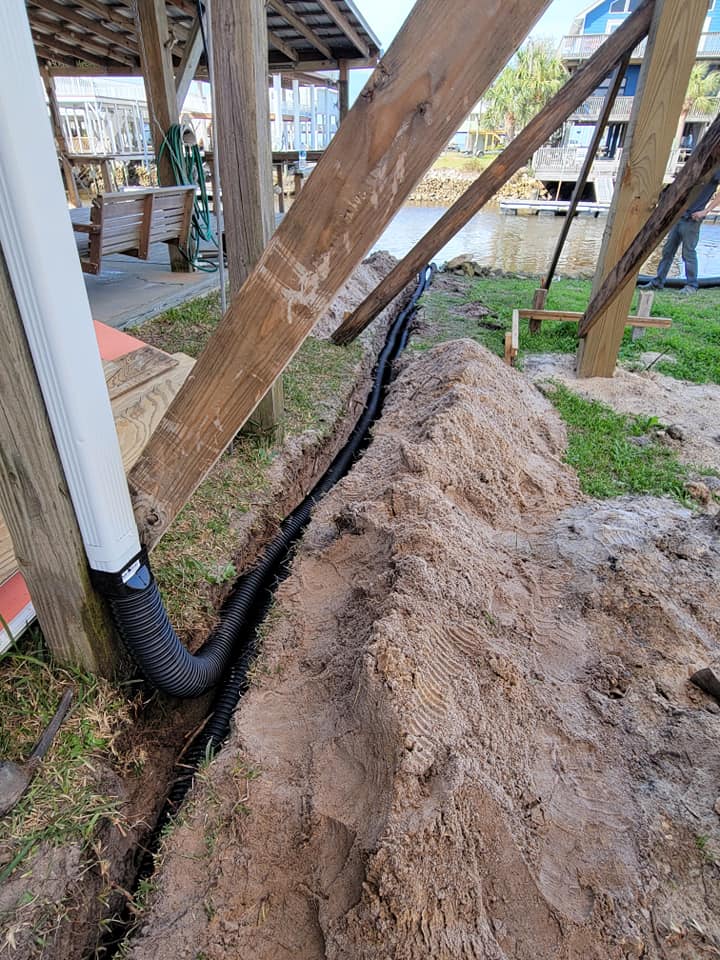
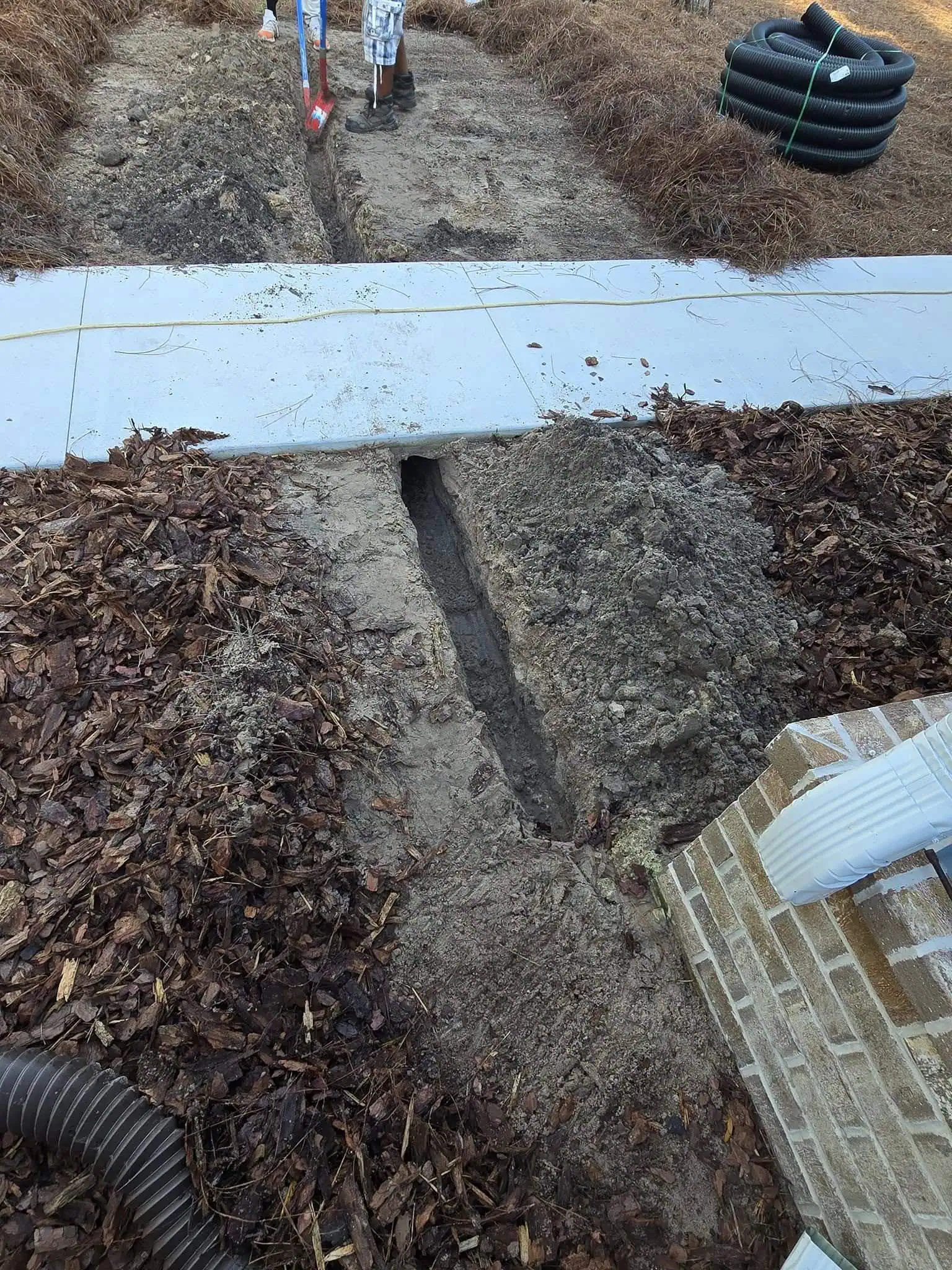
These systems connect directly to gutter downspouts and carry roof runoff through underground piping.
Instead of discharging water next to the home, the system transports it to a designated outlet located safely away from the foundation.
Benefits of Buried Downspouts
Buried downspouts offer several advantages:
- Improved water management
- Reduced foundation exposure to runoff
- Enhanced curb appeal
- Fewer above-ground obstructions
- Reduced trip hazards
By moving roof water away from the structure, homeowners can significantly decrease the risk of foundation moisture problems.
French Drains
French drains are another highly effective solution for managing excess water.
How French Drains Function
A French drain typically consists of a perforated pipe installed within a gravel-filled trench.
As groundwater and surface water enter the trench, the perforated pipe collects the moisture and directs it away from the problem area.
Ideal Applications
French drains are commonly used to address:
- Soggy lawns
- Low-lying areas
- Poor drainage zones
- Water accumulation near foundations
These systems are particularly effective when groundwater movement contributes to drainage concerns.
Perimeter Drains
Perimeter drains protect at the foundation level.
Placement and Purpose
These systems are installed around the exterior perimeter of a home’s foundation.
Their primary purpose is to intercept groundwater before it reaches foundation walls or footings.
Additional Foundation Protection
By collecting and redirecting groundwater, perimeter drains help reduce moisture pressure and lower the risk of water infiltration.
For homes located in areas with persistent groundwater issues, perimeter drainage systems can provide valuable long-term protection.
Best Practices for Underground Drainage Systems
Proper design and installation are important for system performance.
Use Durable Piping Materials
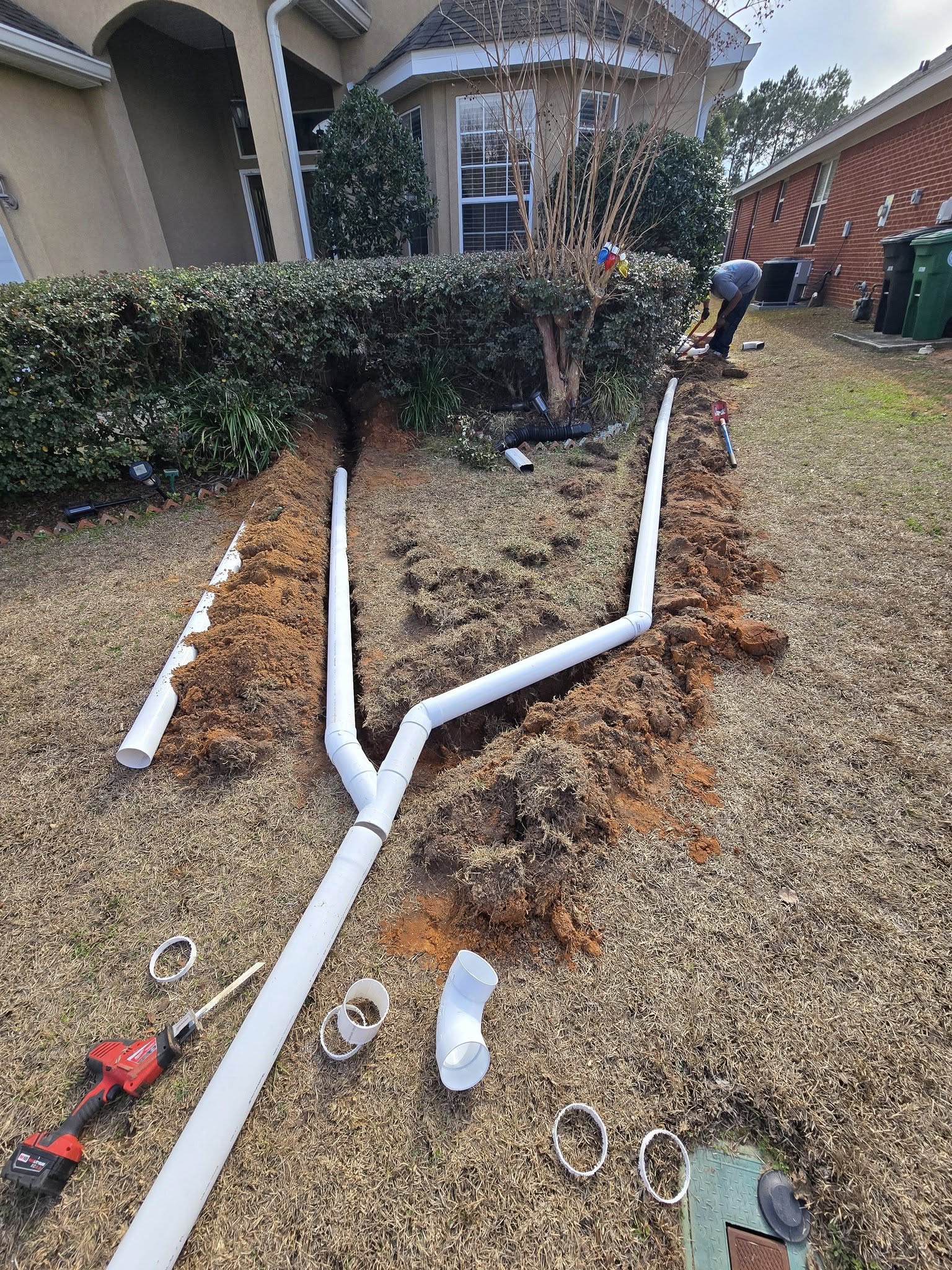
For buried downspout systems, solid-core PVC piping is often preferred because of its durability and smooth interior surface.
These characteristics help reduce the likelihood of debris accumulation and improve long-term reliability.
Maintain Adequate Discharge Distance
Water should be directed a sufficient distance away from the foundation before being released.
A common recommendation is to discharge water at least ten feet from the home whenever site conditions allow.
This helps prevent water from returning toward the structure.
Protect Yard Safety and Appearance
Underground systems offer the advantage of keeping drainage components hidden from view.
This reduces visual clutter and eliminates many of the trip hazards associated with above-ground drainage extensions.
Understanding Local Requirements
Drainage improvements may be subject to local regulations and permitting requirements.
Before installing underground drainage systems, homeowners should verify whether permits or approvals are necessary for the planned work.
Understanding local requirements helps ensure the project complies with applicable standards and avoids unnecessary complications during installation.
Long-Term Benefits of Underground Drains
Investing in underground drainage can provide lasting advantages for homeowners.
Potential benefits include:
- Reduced foundation risk
- Better moisture control
- Improved landscape preservation
- Lower erosion potential
- Enhanced property appearance
- Increased protection during heavy rainfall
These systems often serve as a proactive measure that helps prevent more expensive foundation repairs in the future.
Conclusion
Underground drains are highly effective tools for protecting foundations in Crawfordville, Florida. By collecting and redirecting excess water away from the home, these systems help reduce hydrostatic pressure, prevent soil erosion, and minimize the risk of structural damage.
Whether through buried downspout extensions, French drains, or perimeter drainage systems, proper water management is essential in regions that experience heavy rainfall, fluctuating water tables, and diverse soil conditions. When thoughtfully designed and properly maintained, underground drainage systems can provide long-term protection and peace of mind for homeowners.
Prevent Costly Foundation Repairs with Proper Drainage
Foundation repairs can be expensive and disruptive. Fortunately, many water-related foundation problems can be minimized or avoided with proper drainage management. Bradley’s Custom Gutters provides drainage solutions designed to help homeowners manage runoff and reduce foundation risks. Underground drainage systems help control runoff, reduce soil saturation, and preserve stable conditions around the structure. Crawfordville’s heavy rainfall and fluctuating groundwater levels create conditions that can challenge even well-built homes. Installing the right drainage solution can provide valuable long-term protection and peace of mind. Don’t wait for cracks, settlement, or moisture issues to appear. Contact Bradley’s Custom Gutters today to learn how underground drainage can help protect your foundation and reduce future repair costs.
How Do Underground Drains Protect a Foundation?
Underground drains play an important role in protecting a home’s foundation by collecting excess water and directing it away from the structure. When rainwater accumulates around the foundation, it can increase soil moisture levels and exert pressure on foundation walls. Over time, this can contribute to moisture intrusion, soil movement, and structural concerns. By moving water away from the home, underground drainage systems help maintain a drier environment around the foundation and reduce the risk of water-related damage.
What Is a Buried Downspout Extension?
A buried downspout extension is an underground drainage pipe connected directly to a gutter downspout. Instead of allowing roof runoff to discharge near the home’s foundation, the extension carries the water through an underground pipe and discharges it farther from the structure. This helps prevent water from pooling around the foundation, reduces soil erosion, and improves overall drainage performance. Buried downspout extensions are commonly used as part of a comprehensive drainage system to manage roof runoff better.
When Is a French Drain Useful?
A French drain is often used when a property experiences ongoing drainage challenges. These systems are designed to collect and redirect groundwater before it can accumulate in unwanted areas. French drains are particularly effective for managing soggy lawns, poor-draining areas, standing water, and moisture buildup near foundations. By intercepting excess water below the surface, they help improve drainage conditions and reduce the potential for water-related damage around the property.
What Is Hydrostatic Pressure?
Hydrostatic pressure is the force exerted by water-saturated soil pushing against foundation walls and other below-grade structures. As soil absorbs and retains water, the pressure exerted on the foundation can increase significantly. Over time, excessive hydrostatic pressure may contribute to foundation cracks, basement moisture problems, and structural stress. Proper drainage systems help reduce water accumulation in the soil, which in turn helps minimize hydrostatic pressure around the home.
How Far Should Drainage Water Be Discharged From a Home?
To help protect the foundation and surrounding landscape, drainage systems should direct water a sufficient distance away from the home whenever possible. A common recommendation is to discharge water at least ten feet from the foundation. Moving water away from the structure helps reduce soil saturation, limits moisture buildup near foundation walls, and decreases the risk of erosion and drainage-related issues. The exact discharge location may vary depending on property layout, grading, and local drainage conditions, but the goal is always to prevent water from returning toward the home.
Thank you for reading. Stay tuned for more updates.